

When someone dies, the house usually gets appraised. The contents usually do not, even though they often include a vehicle, a shop full of tools, firearms, collections or antiques with real value. Leaving them out causes problems later: heirs dispute who got more, and nobody can show what the property was worth when they inherited it.
A date-of-death appraisal of personal property records what was there and what it was worth on the date of death. That value generally becomes the heirs’ starting point for any later sale, and it gives the executor a defensible basis for dividing property fairly or reporting it where the estate requires.
Most contents can be appraised remotely, even months after the date of death, as long as the items are photographed and listed before anything is sold, donated or thrown away. Ordinary household goods are typically valued by room or category; items of significant value are listed individually.
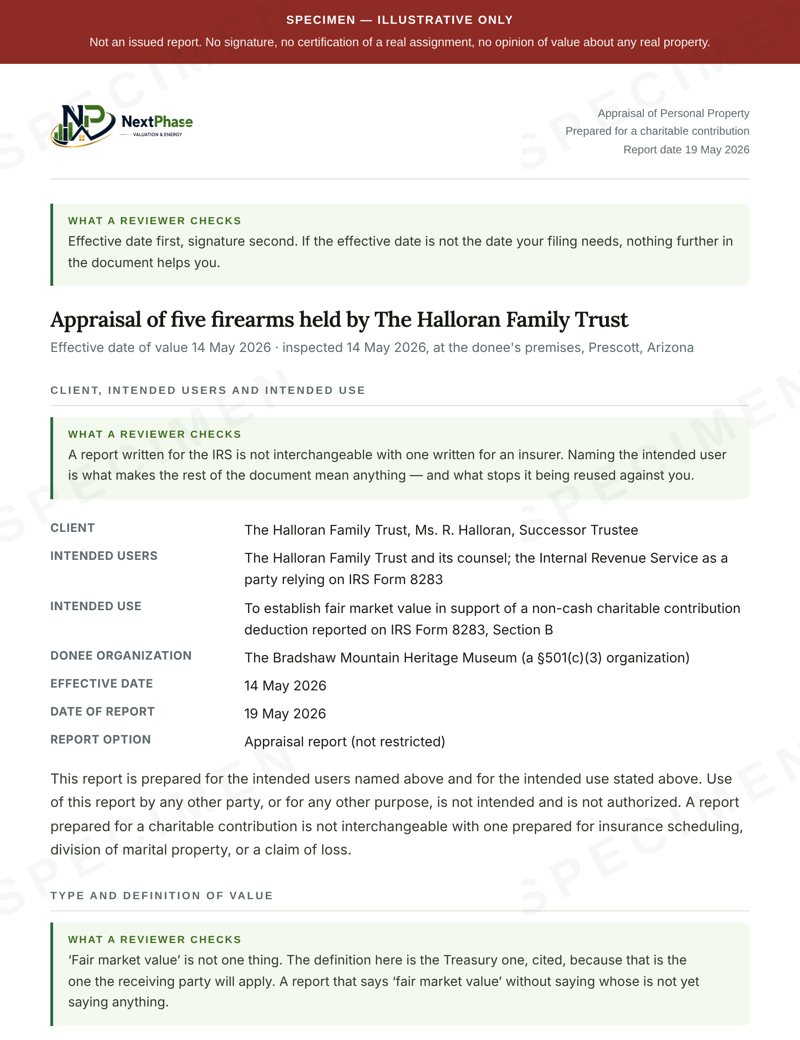
The report states its effective date, intended use, the definition of value used, and how each conclusion was reached, so it holds up if a beneficiary or a reviewer questions it.
NextPhase appraises estate contents for executors, trustees and attorneys anywhere in the United States, with a fixed written quote before any work begins.

 Retrospective and date-of-death valuations